The more I read back-to-the-land literature, the more I realize that living off-the-grid is an ill-defined term. It is way too general a term to be of much use. Off-the-grid (OTG) can mean almost anything.
Of course it means living off the grid; that one is not residing on the electrical, water supply, sewer, public transit, information, microwave and cable grids.
And just so you know; there is such a thing as a behavioural grid and some people live way off that, too. In it’s extreme form it can be criminal or psychotic.
But – more conventionally speaking – OTG also means many different and equally as defining things for the different authors I have encountered.
As you might expect, simplicity is a big theme. So is going natural (less artificial, fewer ‘chemicals’). Slow (one’s own pace). Local focus (community). Frugal (anti-materialistic). Independent (less reliant on others and others’ systems), peaceful (less ambitious, less aggressive), environmental, resourceful and freedom (from rules and regulations) are just some of the words that seem to come along with the stories and lessons of those writers describing living off the grid.
And, if they were being more truthful, they could add a few more that don’t seem to be as recognized or admitted by usual OTG descriptions.
Rebellion, rejection, suspicion and defiance come to mind. Active non-compliance with conventional mores, behaviours and even dress are common. Discomfort, fear, loathing, disgust and defeat also show up. Living off the grid is not done in a rose garden.
There is definitely a dark side to the OTG lifestyle but, I think, on a lesser scale than in the city. I think OTG living is potentially and more often healthier than the usual urban way. But not always. Of course, it depends on the person and it depends on just how far off the grid, they go.
Some would go off the sane grid regardless of whether they are in the city or the country.
OTGérs can get a bit too far ‘out there’ sometimes. Paranoia, isolation and elitism show up now and then as well. Isolation from the larger village can lead to depression, apathy and even madness. Living off the grid (OTG) is like anything else – there is a yin and a yang to it.
Don’t get me wrong. Living OTG is nowhere near the hellish state that the above paragraphs might imply. It is, rather, that living off the grid does not exempt any of us from the dark sides of life and, in some cases some dark parts might be a bit more pronounced on a per capita basis when you are off-the-grid.
If there is one common OTG feeling that manifests more than another, it is ‘rejection’ of the norm. Almost everyone out here has rejected some parts of life as they are normally lived by the madding crowd. Some more. Some less.
It is true for me. I have a list of things I reject or choose not to participate in that would be considered as normal, common or usual ways. I am, I think, on the cusp of functional normalcy and have one foot in some other place too indistinct to describe accurately. Whatever it is, my lifestyle attitude is not conventional. Nor do I want it to be.
But I do wonder sometimes why more people don’t want to do this………
It doesn’t follow that rejection of the norm is the answer, though. Sometimes rejection just leaves a void and that void can be filled by anything. Sometimes it is the dark side.
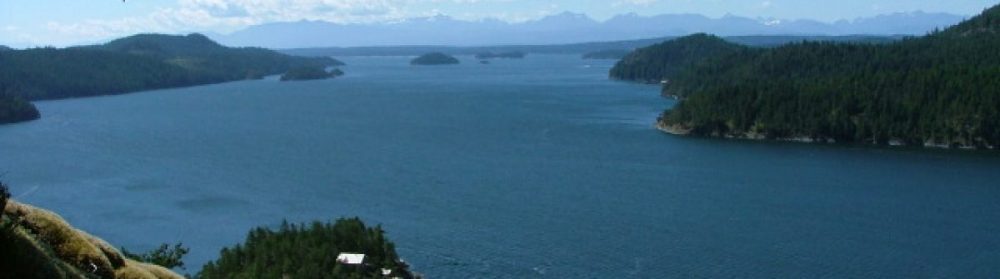
Something as simple as rejecting the cul de sac/apartment/condo can lead to loneliness, isolation and madness – not a constructive alternative – rather than a nice cabin with a view of the sea. So far, my rejection of the norm has worked out nicely. But the story is still being writ.
Bear in mind that for every OTG story that carries a happy theme (i.e. Dispatches from off-the-grid) there is a Mad Trapper or Cat Lady tale that may never be told. There are a lot of lonely stories out here and only some of them wanted it that way.
Living off the grid is not always good.
But it is an alternative. And, for the lucky ones, it is great.
 Our Off the Grid Home