Society forms for a few basic and long-necessary reasons; protection, reproduction and cooperation being the obvious big three.
We derive some sense of security in numbers. It’s kinda primal. Our group vs the other one. Bloods vs Crips. America vs Russia, et al. That kind of thing. It may even be more primal than that, tracing it’s roots back to schools of fish, flocks of birds or herds of animals. The risk to the individual is made less by being surrounded by so many just-as-vulnerable others. Playing the odds is still our primary go-to method for achieving safety.
Reproduction, it seems, is well-served by diversity and there is obviously more diversity in numbers. If a potential father has little to offer, he stands a better chance of finding a little-to-offer but willing mother in a large crowd. We are more like rats than bees in that regard. God bless the gene pool.
And cooperation is the magic that humans bring to the equation more than any other species. An antelope may increase their chance to reproduce or be protected because of the herd but antelope don’t share grass. No handsome antelope sidles up to a real pronghorn cutie with a bunch of prairie grass in his mouth to ‘help out’. Even domesticated animals don’t share food very much.
But we do.
We have the magic of sharing, cooperation, specialization and even the systems to distribute it all. Not only that, we have complicated production and we have even more complicated systems to get it to others around the world. Animals generally don’t. Some insects do to some extent. But they are generally less egalitarian than we are and definitely more single-minded. Ours is a major leap in the complexity of life.
And, for a long time – maybe the last few hundred years – we have become increasingly more complex, more interdependent, more dependent, more specialized and more vulnerable to the fortunes and mishaps of the group than ever before. In fact, the modern person is, for the most part, incapable of surviving alone. Even the intrepid, well-equipped and skilled couple would likely perish living completely isolated fr any length of time. Modern mankind needs modern mankind.
But what happens when modern mankind starts to develop lemming-like tendencies? What happens when the larger mass of humanity encounters the hard-to-see virulent disease of the microscopic invader? Or, what if the complex and relied on life-style of the many is actually self-destructive? Even worse, what if it is environmentally destructive? What then?
Well, the answer for the most part, is that previous survivor groups simply moved on. Nomads having herds of goats or camels would overgraze an area and then move on to do their destructive practices elsewhere. Easter Islanders, on the other hand, had nowhere to go. They perished. Moving away to another place worked so long as there weren’t too many eaters and the main victim was fast growing grass. Seven billion people make a much larger and more complex destructive impact and, with few exceptions, there are not a lot of places to go to next. Not for 7 billion, anyway.
But there is a bright spot. It’s OTG.
Even though 7 billion people can seemingly destroy the environment for everyone (or so it is currently postulated) the fact is that the seven billion have, like lemmings, run to the epicentre of the problem. They are gathering in cities. It is, in my view, dystopic. Suicidal.
What might look like on the surface as protection (grouping) and cooperation (complex systems) is, in fact, more like a concentration of the species for exploitation. That exploitation may come in the form of disparate economics thus nullifying the benefits of cooperation or it may come in the form of an easier-to-spread contagion. Viruses do better in cities.
If any of the above was actually true, then a species intent on survival would cause to create contrarians. Geneticists call them mutants. Psychologists call them deviants. Popular society calls them rebels and I tend to ascribe the term free radicals. Basically, it is a term for those who refuse the Kool Aid. Those who choose a different path.
It’s a form of diversification, not putting all your eggs in one basket. In a sense, it is as inherent to survival as is the gene pool. Sending out ‘runners’ is a survival technique.
And there is no question in my mind that OTG’ers self describe as survivors. They may not use that term because they are not constantly faced with threat but, scratch the surface and you hear and see survival skills being developed. They are like the ship sent into space to colonize another world except they just leave the overpopulated area and colonize another world off the grid.
There is no question that mankind is a social animal. But there is an equal founding principle for man’s survival through adaptability. Adaptability and group-think are not mutually exclusive but they do tend to show up that way. Those who go along to get along are group thinkers as a rule. Those who chaff in the cul de sac are looking for alternatives. They have to be more adaptable as a result.
“Dave, what’s your point?”
“Well, If you don’t have a ticket on Virgin Space Travel or are a preferred guest of Elon Musk, then the next best place to move on to is a remote island NOT near you.”
Jus’ sayin’….


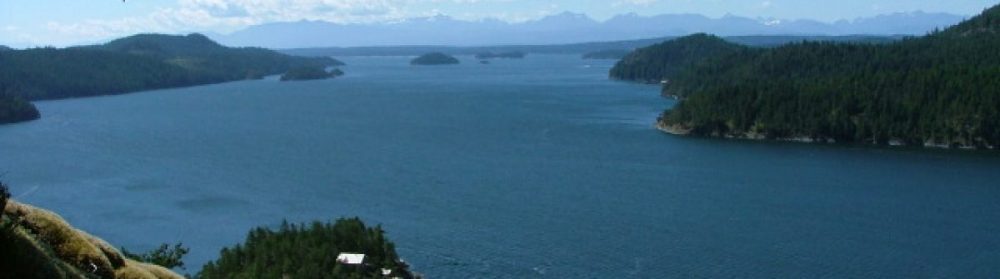
 Our Off the Grid Home