Richard Heinberg’s book, the END OF GROWTH, makes a convincing argument as to why the current economic structure can no longer endure. He is systemically speaking, apocalyptic. He cites plenty of proof but the basic tenet is that you cannot base a financial system on infinite growth when it and everyone involved in it is constrained by a finite planet. And all the eco-lefties agree with him.
I do, too.
When Sal and I decided to move off the grid, it was for many reasons but the main (negative) one was my unease, lack of fulfillment, awareness of a general social malaise or, more simply put: I was getting bad vibes. Seriously, dude. I won’t describe all that again (see: past blogs) or all the vibes involved in my discontent. But the system felt wrong, very, very wrong. In so many ways.
And, to be fair, environment and ecology was (at the time) among the lesser of the issues that I was worried about.
I remember feeling it fully for the first time when returning from a vacation and finding my self ambivalent at the prospect of more racing with the rats. It really felt like I was headed for just more of the same ol’, same ol’. I felt a basic disconnect with the madding crowd and the life goals being popularly espoused (the Maddoff syndrome).
But we came back, anyway. And I went on an anti-greed rant for a while. But, ultimately, we just ran away.
And there is nothing wrong with that.
But Heinberg says there is.
“Ultimately, the only thing the individual can do is run away, become more independent, tread more lightly, grow their own food and seek local community” (paraphrased rather than directly quoted). “And that will fail because individuals will operate on too small a scale. Operating on the big scale requires such radical and universal social and governmental change, and subsequently painful transitioning to a more sustainable model, that we are likely too late and the change needed will be too radical for mass acceptance”.
TRANSLATION: we are all gonna die.
But many great economists have prophesized that scenario many times before and we all seemed to muddle along until the next great recession/depression (usually just around the next corner) came and went, hatching a few more new, brilliant and well-founded doomsday-sayers ready for the next cycle. We have hit that black wall before.
Heinberg says this is a different kind of wall. This one is insurmountable. True, it is still just a wall of debt, corruption and mismanagement – like the old days – but it is the last in a series of walls founded on a very wrong premise (pirate capitalism, inflation, inequality, financial leaching, false numbers and the very worst, our accountants do not include the real costs of things – like the gas example described below). This time the real cost of things (externality costs are the costs to the planet, that big inventory we keep taking from) are going to bite us.
Pirate capitalism has simply taken too much, too fast. This time the warehouse is showing signs of depletion while the air quality we are breathing is dropping, the exits are blocked and the thermostat is out of control.
The END OF GROWTH (Heinberg’s book) suggests it is all happening already but we won’t feel it for a few decades yet. All you will know is that your standard of living will slowly drop, your taxes, costs and personal restrictions will increase and that, for more and more people, violence will become their default way of expression.
Dave, what brought this on?”
Nothing. Nothing much. I think Heinberg is a bit wrong. I think we all feel it already. OCCUPIERS certainly do. Idle no more. Anti-Enbridgers. And there are lots of them. My discontent is shared.
I felt it in the 90’s and I was aware of feeling it for sure by the year 2000. Heinberg must have, too. I know Lovins and Hawken (Natural Capitalism) felt it. This feeling that the current systems are not serving us and are, in fact, being corrupted is being felt all over the world.
This blog entry is just the logical (or illogical) extension of living off the grid and reading books. I suppose I could claim some kind of observance capacity, too. But everyone sees gas prices rising, food prices rising, prices for everything but Chines-made junk are rising and all the time the rich are getting richer, the poor are getting poorer and the planet is becoming less bountiful. And we are making more consumers every day. And many of them are pirates rather than good neighbours. I mean, ‘DUH!’
It is not so much that the problem is not already in our heads. We all know this stuff – to a lesser or greater extent. The problem is that our governments and corporations are still going at it. The old way. They have blindfolds on.
Worse, they may NOT have blindfolds. They may be acting willfully and with intent because they are planning to continue such destructive ways.
I must admit that the clamp down on freedoms and rights, the increase in censorship and secrecy, the lack of governmental and institutional transparency and the closed-shop nature of governments and corporations today just adds to the suspicion that, if it is not a conspiracy, it is, at the very least a planned separation of the hoi polloi from the 1%. No one feels like ‘we are all in this together’. Most people feel left out.
And – open your eyes – the people are being left out. Small example: They are now proposing to raise Natural gas rates because there has been increased demand over this harsh winter. As if they made the gas!
The gas at the wellhead is free. Nature’s bounty. The actual wellhead has already been paid for, brought into the economic equation at a lesser volume of sales years ago. Probably already paid for many times over. Like the gas pipeline. Any new infrastructure is simply being paid off faster with the greater profits from the greater volume But there is no extra cost because of volume. No one is actually manufacturing gas! The bastards are just billing more!
Natural gas: it is a free natural product. Delivery may cost but the gas is free.
Put another way: So what if there is higher demand? That justifies nothing. Only that Enbridge gets to sell more and make more money. So, why would the price per unit of gas go up?
There is no reason. Only greed.
And Heinberg and I don’t think that is sustainable. Because it isn’t.
The real question is: how long will it be tolerable?
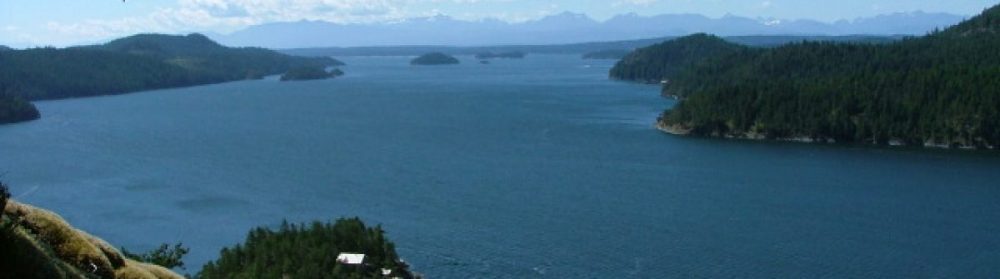


 Our Off the Grid Home