A book reviewer wondered about the lack of practical advice and how-to hints in OUR LIFE OFF THE GRID book. They wanted to know more ‘instructions’ and wanted to get ‘advice’. The assumption, of course, is that after having done the move and the building and then following that up with the actual residing and living, we might know a thing or two about living OTG. And, we do. One thing. Maybe two. Precious little, actually. It was and still is largely a crap shoot in chaos with unpredictable and confusing feedback.
We’re still sorting the data….
But it is fun! That’s conclusion #1. Number two: we’re gonna keep playing at it at least until we get the hang of it. Which, judging from our chaos level so far, I am estimating will take 30 or so more years.
And I am mostly serious. I am mostly not kidding. Organized chaos, perhaps? That is how we feel about it still. We are STILL learning after all these years. Still enjoying each other’s company and we are still having lots to do. So, we’re good.
But what of the advice they asked for, …really? Well, there is no advice as to whether to do it or not. There are no facts, data or lessons that prove the concept. A crapshoot is a crapshoot. Still, I do have a little advice…..
Don’t commit to it. Taste it, instead. Get a cabin. Rent a cabin, even. BE here (or there). TRY it. See if it works for you. I think you will need at least one six-month full-on immersion to get a feel. Two years of summer cottaging MIGHT do it but it is not quite the same as being on the ‘spot’ longer than the summer folks…ya gotta know what it’s like when you are so much more on your own and that happens when the weather changes.
If you build, consider this concept: ZONE-living. Plan for a small house, well insulated with a good kitchen, bathroom and one large bedroom. Maybe a small living area. Then, just outside of that, a bigger, still-insulated space that serves as a big living area and veranda-kinda thing. Space for the service room (electrical, freezer, mud, etc). All of those two areas are under on big roof. Outside of that, a large covered area (maybe even under the same BIGGER roof but it is airy, open, maybe screened in some sections.
Think: wrap-around porch. It gets cold out there in winter. Then, outside of that, deck. Lots of deck. Decks for BBQ’ing, working, sitting. Decks, decks, decks. Maybe some potted plants, arbor, umbrellas but, basically, open deck.
Then you transition to the ‘outside-but-close’ area in which are the sheds, workshops, storage, water, greenhouse, genset shed, guest room with second bathroom….the kind of space that is ‘steps’ away from the main house but not yet ‘somewhere else’. Outside of that is compost, fruit trees, gardens, lawn (if you must) and basically an area that your dog might consider the pack’s immediate domain.
Finally, a less-than-full-bush buffer zone between the dog’s empire and the wild forest. The wild forest is the place where you feel you are NOT home. If it feels like home at all, it is still transition zone.
These living zones are the actual zones we have. Or feel. We do NOT really have them; NOT by design, anyway. But that IS the way we use our space. If I had to do it over, the house would have been a bit smaller and we would have more ‘outdoor-rooms’ before getting to the covered deck area and so on. Why? Because as the season cools, we hunker more around the wood stove. When it gets warmer, we move out. The stove stays off from May til October. The outdoor temperature regulates where we stay. If it is chilly, we are inner. If it is sunny, we are closer to the outdoors. By summer-time, we are almost always outdoors.
How big is a small inner house? For us, 1000 sft.
Then we started spreading. If you add up all the space we think of ‘living space’, we are at 2500-3000 sft. By the time the dog lets go of his patrolling responsibility, we are at two acres. 75 – 90,000 sft. I have no idea if this is typical or not but my immediate neighbours (who live very different annual schedules than we do) are not too dissimilar. Each ‘influences’ an acre or so. Each ‘lives’ like we do – in, when it is cold. Out when it is warm.
It isn’t rocket science but it is something we were NOT conscious of when we started. The above-described zones are something we learned-while-doing. It would constitute advice in the sense that you are NOT likely to live like you do in the city, in well-defined spaces and boundaries. In or out. Out here, you will live to your natural space and that described above is what we grew into.
Advice! Insufferable, isn’t it?
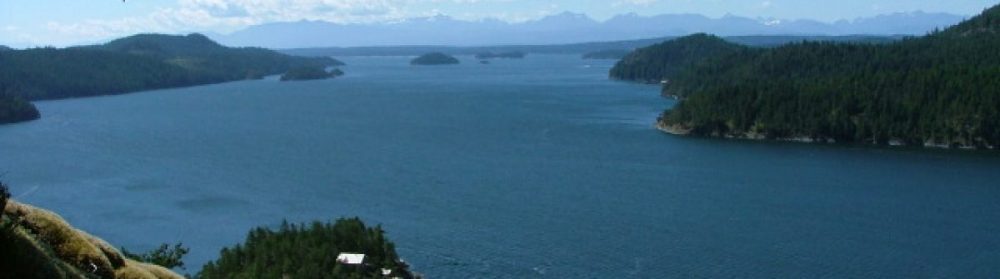


 Our Off the Grid Home