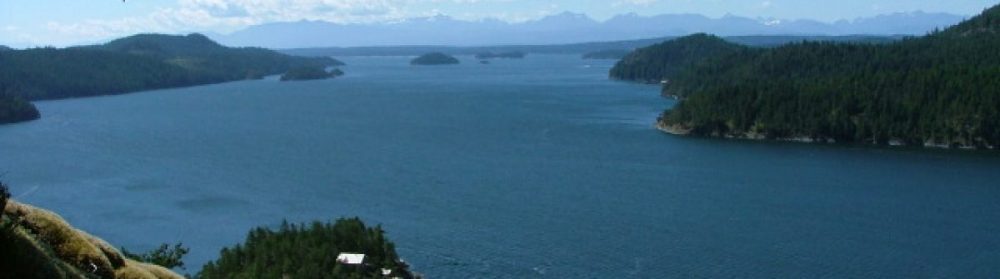
The most desirable way to own land is called ‘freehold’. Of course that does not mean ‘free’ in any real sense but it does mean entirely owned, controlled, managed and occupied by the title-holder (kinda). People LOVE freehold. Weirdly, most people love the concept of freehold more than they do logic or common sense. They would prefer to own 1/8 of an acre freehold in a subdivision, one they can put a fence around, than they would like to own ten acres with a partner or a 100 acres with ten partners. Somehow, the term freehold bestows a sense of freedom, separation and independence from others.
It is not true, of course. If you have a 1/8 acre lot you own freehold and it is surrounded by 799 other ‘freeholders’ then you are actually sharing 100 acres with 799 others. In the city that means roads, sidewalks, building codes, design restrictions, fences, water, electricity and sewage at the very least. You may have a fence on your ‘freehold’ property but even that came with zoning and design restrictions. Your property is freely held in name and concept only. If you have any doubt about that, try not paying your property taxes or turning your home into a brothel.
There are other ways to own land. Strata titling can allow ownership in large tracts of land or apartments in highrise buildings. Strata titling is usually interpreted to mean that you own a box in or on a commonly owned property. In theory, one could remove one’s box from a stack of boxes (like containers stacked at a port) and go somewhere else but, in practice, your box (surveyed, mortgaged and insured) is permanently affixed to all the other boxes at construction and removal is impossible.
Then there are Co-ops. Co-ops are very much like strata titling except the unit you occupy isn’t actually yours. Instead, the unit is part of the common property and you own a share in the entity that owns the land and the living units. That should work for apartments but doesn’t work all-too-often simply because the rules of the co-op are established by the originators and they often put a lot of financial restrictions on it so that each member was not vulnerable to the financial problems that any one individual member might experience. The strata owner of a unit can go bankrupt but that would not affect others in the strata complex but, if a co-op member went bankrupt their share being sued might affect other members. Basically, co-ops are just harder to finance. Co-ops and Strata are similar but different.
And that brings me to corporate ownership…..the form of ownership we employed 49 years ago. Corporate ownership is much like Co-operative ownership, with the attendant early-owner drafted rules and restrictions, but the company format is a more easily understood concept (or it was at the time) and owning shares in a company that own the land made for a small amount of comfort in the event of a sale or the sale of a share. Corporate ownership is also same but different…..but mostly same as Co-op.
“Why bother with all that? Why not just buy freehold and be done with it?”
The main reason was that property OTG is not often subdivided into what is referred to as ‘bite-size’ (meaning affordable by one buyer). Land OTG is more often available in large chunks. Ours was 86 acres. A Co-op along the way on another island is 120 acres. A neighbour or two has 160 acres. When I was 26, I could not even afford a modest condo in Vancouver, let alone 86 acres of waterfront far away up the coast.
But me and nine others could.
After meeting with the ad hoc group that proposed forming a company to buy the land, Sal asked if I liked all the members in the room. “NO. I do not!” I liked three or four and I was ambivalent or non-judgmental over another four or five but I did NOT like two of the possible partners at all. “So, you think we shouldn’t buy in?” “On the contrary. I think we should. It doesn’t matter where you go, you will have neighbours. And some you will like and some you won’t. So, liking them is not an issue. The issue is that 10 shares of 86 acres provides us with 8.6 acres of separation. That is the kind of ratio that allows for space between us. We cannot afford 8.6 acres any other way.”
As it turned out, some of the original shareholders changed their minds and wanted to sell later on and so we bought them out. Eventually, six of us remained the only shareholders. My share is, theoretically now, 14.3 acres. In reality it is more like one square foot or inch in six square feet or inches. Everything except our building site is ‘common area’.
In a weird twist the Regional District restricted (at the time) lots to a minimum 10 acres which might have dictated that we would be limited to eight shares but that new regulation allowed for two homes on each 10 acre parcel. So, maybe we could have 20 shares? In fact, a company can issue thousands of shares but the zoning might still restrict the number of homes to 20….it is all rather silly, actually. Especially when you consider that a large parcel adjacent to us is Crown Land and, when hiking through the forest, our separate parcels are indistinguishable. In real life, forest is forest.
Our governance, the Regional District, really does not care very much about us. They provide no services or amenities, no support or even on-the-ground presence. We have logging roads and some docks and that is about it. They don’t care. And, even if they did care, they have violated their own rules any number of times. We have some one acre parcels cheek-by-jowl with 160 acre lots. They are not consistent. More to the point: they do not want to care. They do not want to provide service. The tax base just isn’t there to pay for it.
“Why mention all this, Dave?” Because most people have a conventional mind-set when purchasing real estate. That ‘mind-set’ involves realtors and listings and house inspections, financing and insurance. That mindset carries over…..and little of that urban mindset applies out here….well, not in the conventional sense, anyway. Realtors are not interested in working to sell a remote site at a lower price than a nearby condo…too much trouble and expense for them. Most houses would not pass a house inspection because most of the systems are ‘cobbled’ to fit the circumstance. Some old places still have outhouses. We have a stream. Some have a well. Others catch rainwater. No one has conventional Hydropower. There is no ‘professional’ fire protection or police. We do not have roads that actually go anywhere…..
…this is much more…free….hold.
Moving OTG is different. Really different. A lot of conventional real estate purchasing thinking is inapplicable and, more to the point, unworkable. Just the property’s orientation to the sun is a different requirement! This OTG ‘difference’ using real estate as an example is just one part of the difference that a person moving OTG will likely experience, from building to food gathering, from social engagement and entertainment to the kinds of dogs you might have. Tools and machinery even take on a bigger role. I cannot honestly state that living OTG is like living in a foreign land but it is definitely a slightly foreign culture with many different life-adjustments to make it work.
 Our Off the Grid Home